What Is Enterprise Governance — And Why Most Senior Leaders Get It Wrong
PSPauline Smith EdD · July 27, 2026 · 4 min read
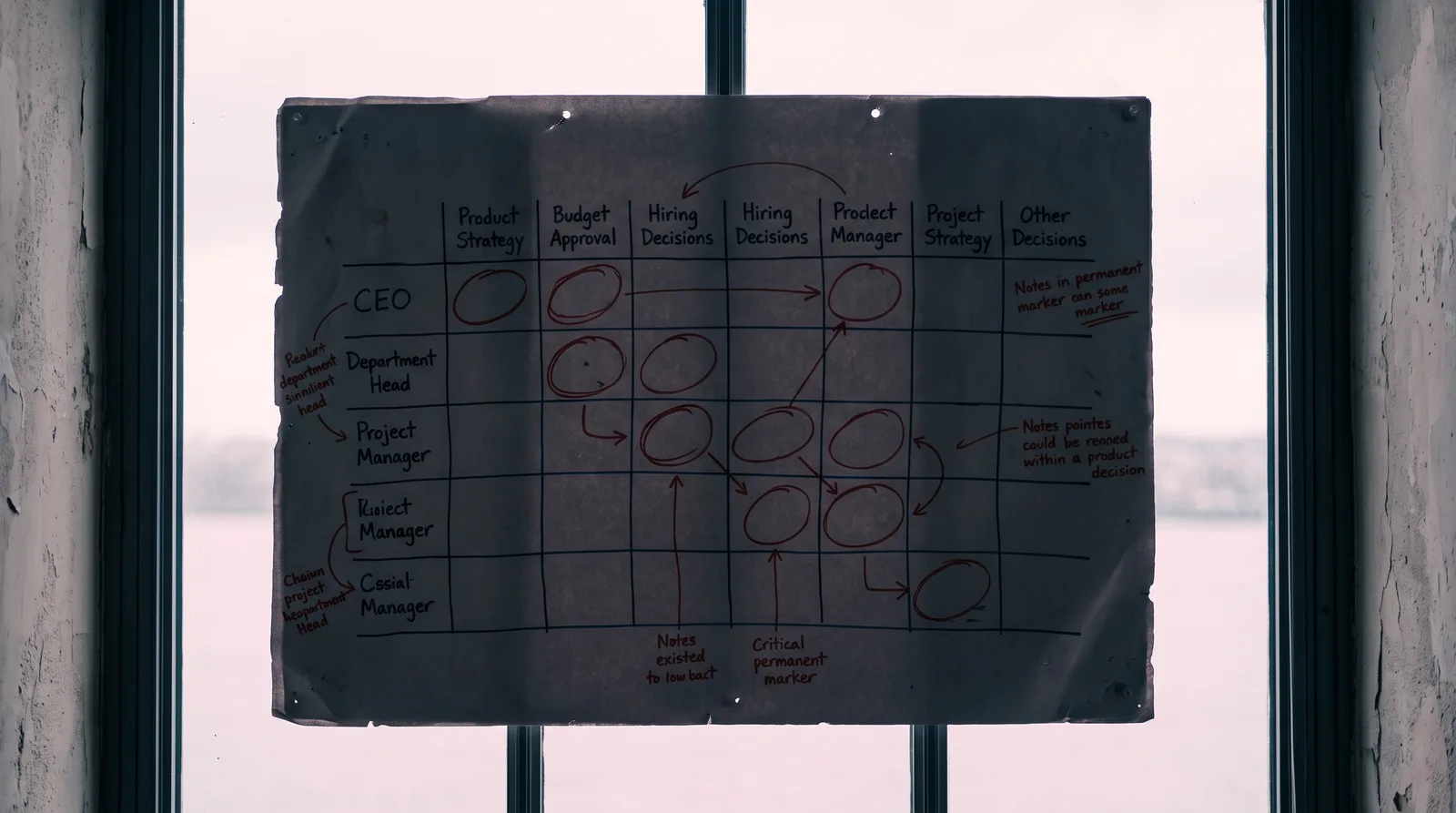
Ask a room full of senior leaders what "enterprise governance" means, and you'll get one of two answers. The first group will describe it as compliance machinery — audit trails, approval chains, policy binders. The second group will give you a vague nod toward "accountability" and move on quickly, because honestly, they'd rather be talking about strategy.
Here's what I need both groups to understand: governance is strategy. When it's architected correctly, it is the mechanism through which every other strategic initiative either succeeds or quietly collapses. Getting it wrong isn't a procedural problem — it's an enterprise value problem.
The Most Common Misconception I See
The mistake most senior leaders make is treating governance as a control function bolted onto the outside of operations. They create a governance committee, hand it a charter, populate it with the right titles, and consider the job done. What they've actually built is a speed bump — a layer that slows decisions down without adding clarity, accountability, or strategic alignment.
Real governance is not about restriction. It's about decision rights. It answers three foundational questions that, without a deliberate framework, quietly paralyze organizations:
- Who has the authority to decide what?
- How does information flow to the people who need it to decide well?
- How does the organization course-correct when decisions produce bad outcomes?
Until those three questions have explicit, documented, operationalized answers, you don't have a governance framework — you have a governance wish.
What a Properly Architected Governance Framework Actually Looks Like
Let me make this concrete. A functional enterprise governance framework has four interlocking components.
1. A Decision Rights Matrix This is the backbone. Every significant category of decision — capital allocation, vendor contracts, workforce restructuring, technology adoption, strategic pivots — gets mapped to a decision owner, an approval authority, and a consultation requirement. The matrix isn't a org chart. It's a living document that tells any leader, on any given Tuesday, exactly what they can decide unilaterally, what requires escalation, and what requires board-level visibility.
Without this, you get two equally damaging failure modes: executives who are paralyzed waiting for approvals that were never formally required, and executives who make million-dollar calls that should have had oversight and didn't.
2. A Performance Reporting Architecture Governance without information is theater. Your framework needs to define — in advance — what data reaches which level of leadership, on what cadence, in what format, and with what decision trigger attached to it. A board-level dashboard looks nothing like a departmental operations report. If your executives are drowning in operational detail, or your board is flying blind on strategic indicators, your information architecture is broken, and your governance will be too.
The test I use: for every report in your organization, ask what decision is this designed to support? If no one can answer that clearly, the report is noise.
3. An Accountability and Escalation Protocol This is where governance gets uncomfortable, which is exactly why most organizations skip it. Your framework must define what happens when performance thresholds are missed, when a decision owner exceeds their authority, or when a strategic initiative drifts off course. Not in punitive terms — in structural terms. What triggers a formal review? Who convenes it? What authority does that review carry? What are the defined remediation pathways?
Organizations that can't answer these questions consistently don't have a governance culture. They have a politics culture — and those run on whoever has the most influence in the room that day.
4. A Governance Calendar Even the best framework decays without rhythm. A governance calendar establishes the regular cadences at which strategy is reviewed, performance is assessed, risks are surfaced, and frameworks themselves are audited for relevance. Quarterly board reviews, monthly executive portfolio check-ins, annual governance framework assessments — these aren't bureaucratic rituals. They are the heartbeat that keeps the whole system alive and responsive.
Why This Matters at the Executive Level
If you are a senior leader, your job is not to execute tasks. Your job is to create the conditions under which your organization can execute well — repeatedly, at scale, under uncertainty. That is governance. Every time your organization stalls on a decision because no one is sure who owns it, every time a strategic initiative fails because performance signals weren't reaching the right people in time, every time a risk materializes that a proper escalation protocol would have caught — that is a governance failure. And it lands on your desk.
The good news is that governance frameworks are buildable. They're not mysterious. They require deliberate design, executive sponsorship, and the discipline to actually use them — but they are entirely within your reach.
The leaders who master this don't just run cleaner organizations. They run faster ones. Because when decision rights are clear, information flows efficiently, and accountability is structural rather than political, the entire enterprise moves with a confidence that no amount of motivational strategy can manufacture.
That's the architecture worth building. And it starts with deciding that governance isn't red tape — it's the strategic lever you've been underleveraging.

Want to go deeper than a blog post?
Executive Governance Mastery by Brown Tech Academy Industry
A rigorous, credential-aligned practicum that equips senior leaders to architect enterprise governance frameworks, command performance reporting, and drive strategic decisions with clarity and accountability. Built for executives who need to lead at the portfolio level — not just manage projects.
Start learning — $150/mo